REAL WORK
Work that feeds people, heals places, and solves problems.
 The Ssussdriad
Young people were never meant to prepare for life from a desk.
They grow, build, cook, map, interview, test, design, and leave proof behind.
Hanford, California · Kings River Watershed


Work that feeds people, heals places, and solves problems.
Trails are invitations.
Learners choose what calls them.
Work leaves proof —
journals, badges, projects, maps, and stories.
Rooted in Hanford
and the Kings River watershed.
My work matters.
Our community becomes more capable.
We care for the land,
for each other, and for the trail ahead.
The daily rhythm
Welcome. Orient. Prepare.
Learn. Build. Serve. Solve.
Reflect. Witness. Remember. Return.
Every day ends with proof and a next horizon.
EXPEDITIONARY EDUCATION
A garden calls for biology, patience, measurement, design, judgment, and care; a meal draws on chemistry, culture, mathematics, hospitality, and service; and a broken machine demands observation, courage, tools, logic, and persistence. Learning, then, belongs back together: learners move through broad fields of real work, following questions, joining crews, practicing skills, making mistakes, building useful things, and discovering how their growing capabilities can serve the world around them.

Learn to read the living world.
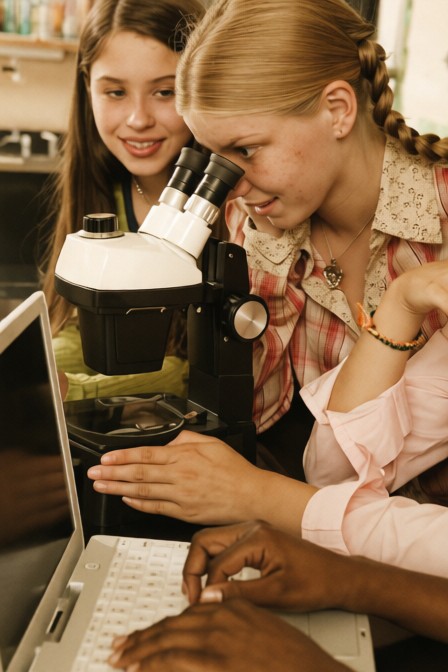
Soil under the microscope. Water moving across land. Seeds becoming food. Weather changing the plan.
Learners grow, observe, test, restore, and steward—discovering that the land is not scenery, but a living system they can learn to understand and care for.

Learn to nourish people.
Fire, fermentation, nutrition, sourcing, preservation, kitchen craft, and the ancient work of setting a table.
Learners follow food from soil to plate and discover that feeding people well is part science, part culture, part resilience, and part love made practical.

Learn to make, repair, and build.
Wood. Metal. Machines. Measurements. Fasteners. Materials. Broken things waiting for capable hands.
Learners gain confidence through real tools and real work—moving from “What does this do?” to “I know how to fix it.”

Learn to see clearly—and tell the truth well.
Cameras become instruments of attention. Interviews become lessons in listening. Editing becomes judgment. Stories become public memory.
Learners investigate, photograph, film, write, broadcast, and help their community see the people, places, work, and possibilities already around them.

Learn to shape the world you share.
A need becomes a proposal. An idea becomes a budget. A disagreement becomes a council question. Useful work becomes something another person values.
Learners practice governance, strategy, exchange, leadership, collaboration, and the difficult art of turning ideas into things that actually work.
Learn to follow the living edge.
Build the fort. Skip rocks across the pond. Invent the game. Take the thing apart. Ask the strange question. Wander long enough to notice what everyone else missed.
Play protects curiosity, courage, imagination, experimentation, and the learner's growing ability to find a trail of their own.
Read closely. Ask better questions. Test claims. Explain what you know. Listen seriously. Disagree without losing the thread.
Make the useful thing worth caring for. Give form to ideas. Notice proportion, materials, clarity, craft, and the difference between finished and merely done.
Move with confidence. Understand tools and risk. Practice judgment. Earn greater freedom by learning how to carry it responsibly.
Choose a trail. Stay with difficulty. Notice what happened. Ask what changed. Decide what deserves another attempt.
They are capabilities carried from the garden to the workshop, from the kitchen to the camera, from the council table to the next unexplored trail.
THE FIELDS CHANGE. THE DEEPER WORK REMAINS:observe carefully, think clearly, make something useful, leave proof behind, and become capable enough to carry more.
FIELD NOTE 017
Follow one question through the field.
Where does Hanford’s water come from?
01 / THE QUESTION


02 / FIELDWORK
We move into the field, collect samples, and trace the river from the Sierra toward the valley.
SAMPLE COLLECTION
Upper Kings River · 5/12
Kings River Canal · 5/12
Dr. Lewis Spring · 5/13
03 / DISCOVERY
LOCAL INTERVIEW
Mr. R., 3rd generation farmer near Trimmer Springs.
OBSERVATIONS
Flow + clarity measured · irrigation diversions noted · field notes compared
04 / MAKING

LEARNER-BUILT MAP
— trail route · ○ sample sites · △ interviews · □ observations
05 / PROOF
PROOF LEFT BEHIND / LEARNER EVIDENCE
06 / RETURN
The map returns as something the crew can review, question, use, and share.
FIELD DISPATCH 017
A learner expedition from the Kings River watershed.
VISIBLE EVIDENCE
“I did something real.
I saw what changed.”
Growth should be visible.
What have I practiced, improved, built, repaired, contributed, or understood more deeply?
01 / DO THE WORK
Practice something real.
Build. Cook. Map. Interview. Repair. Grow. Present. Serve.
02 / RECORD THE TRAIL
Make the learning visible.
Observations, sketches, field notes, decisions, revisions, reflections.
What we did. Why it mattered. Who helped. What we learned. What remains. What comes next.
03 / REVIEW + REVISE
The first attempt is not the finish line.
Peer review is part of the culture of ownership. Feedback is not a verdict. It is part of the craft.
Revise and try again.
04 / EARN TRUST
Recognition follows demonstrated capability.
Badges are not trophies.
They are signs of trust.
05 / SHARE THE PROOF
Strong work moves outward.
Proof — what happened.
Story — why it mattered.
Step — what comes next.
THE EXPEDITION NETWORK
No classroom can contain all the knowledge a young person needs. The Expedition opens outward—to real people, real places, and real community needs.
They bring skill, story, tools, places, and opportunity.
Learners return work, service, ideas, stories, and growing capability.
SKILL · PLACE · MEMORY · TOOLS · REAL NEEDS

Teach land stewardship and growing food.
Share craft, design, and making.

Mentor through real repair and problem solving.

Teach nourishment, hospitality, and care.

Share memory, wisdom, and place.

Share craft, creative voice, beauty, and story.

Show how value is created locally.
Name real needs and welcome real help.
COMMUNITY → LEARNER

Receives from the community.
Learns by doing.
Carries responsibility.
LEARNER → COMMUNITY
Build. Repair. Grow. Cook. Design. Map. Make things better.
Help where it matters. Strengthen people, projects, and places.
Document what happened. Preserve what matters.
Take on more. Lead more. Carry more.
Choose a way in
Explore This Trail
Explore This Trail
 Explore This Trail

Where the work begins.
Land · Tools · Food · Play
Where the work becomes public.
Studio · Stage · Map Wall · Guild TablesOne campus grows capability. The other gathers, publishes, and shares it.

The return
Come see the work. Meet the Field Guides. Find the place where your young person can contribute.